
Restaurant Cleaning Schertz
Keep your kitchen, dining room, and restrooms ready for every shift with a cleaning plan built around your hours, equipment, and sanitation priorities.
Dependable Restaurant Cleaning for Schertz Businesses
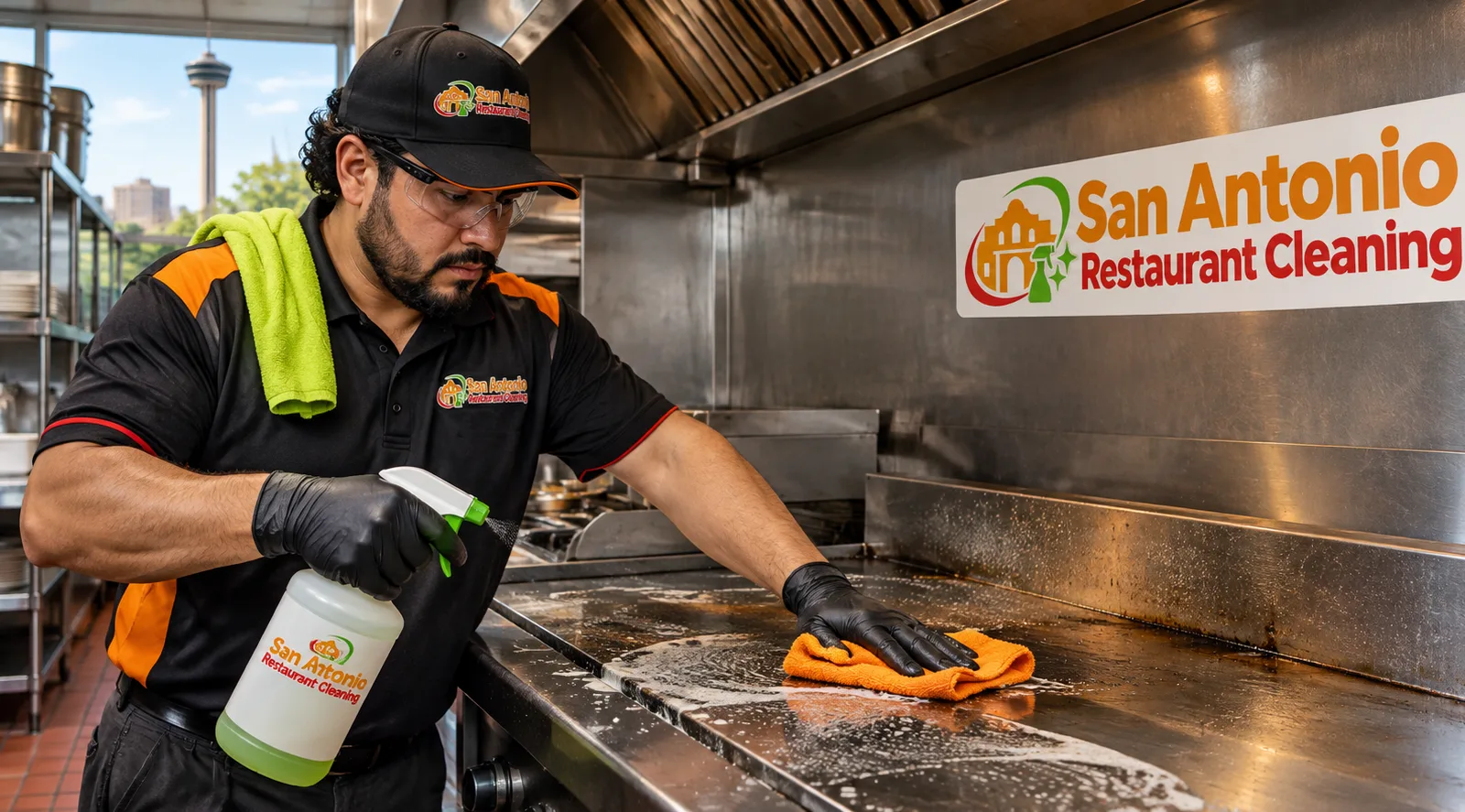
Restaurant Cleaning Schertz businesses can schedule around opening hours, closing duties, deliveries, and prep work. San Antonio Restaurant Cleaning handles recurring and detail cleaning for commercial kitchens, dining rooms, service counters, employee areas, and customer restrooms. The scope is based on the facility rather than a generic checklist, so attention goes where grease, food residue, spills, and frequent contact create the most work.
Our team at San Antonio's local restaurant service coordinates the work with managers and designated keyholders, documents the agreed scope, and follows a repeatable routine. We can clean after closing or during another approved low-traffic period, depending on access and operating hours. That planning matters for Schertz restaurants serving commuters along Interstate 35 and FM 78, where early openings, dinner rushes, and late closing times can leave a narrow cleaning window.
Commercial cleaning supports the restaurant's own food-safety program; it does not replace employee hygiene, pest control, equipment maintenance, or required inspections. We separate food-contact tasks from floors and restroom work, follow product labels and dwell times, and use clean tools for each designated area. Managers receive a clear description of what is included, how often it will be completed, and which conditions need separate approval.
What Restaurant Cleaning Services in Schertz Can Cover
Commercial Kitchen Cleaning
Degreasing and cleaning can cover floors, baseboards, washable wall surfaces, prep-area exteriors, shelving, sinks, and accessible equipment exteriors. Food-contact surfaces require an approved cleaning and sanitizing process consistent with the restaurant's procedures and chemical labels.
Dining and Guest Areas
Tables, chairs, booths, partitions, ledges, entry glass, and hard floors receive routine attention. Cleaning plans account for crumbs beneath seating, drink residue, fingerprints, and soil tracked through busy entrances.
Restrooms
Fixtures, mirrors, partitions, dispensers, touchpoints, floors, and odor-prone areas are cleaned using restroom-designated supplies. Restrooms remain separate from kitchen and dining-room tool sets to reduce cross-contamination.
High-Touch Surfaces
Door handles, push plates, railings, payment-area surfaces, switches, and other frequently handled points can be added to each visit. The exact list is recorded so the same items receive attention each time.
Floor Care
Appropriate methods are selected for quarry tile, sealed concrete, resilient flooring, and other commercial surfaces. Corners, grout lines, edges, and routes between the kitchen and dining room often need more detail than open floor areas.
Scheduled Detail Work
Periodic service can address buildup beneath movable equipment, floor edges, walls, vents that are safely accessible, and other areas omitted from daily closing duties. Specialized exhaust-system and duct work should be assigned to a qualified provider.
A Cleaning Plan Built Around the Restaurant
A useful proposal starts with a walkthrough. We review the kitchen layout, dining capacity, restroom count, flooring, access procedure, waste-handling expectations, and the condition of surfaces. We also identify which tasks employees already complete so the professional service fills real gaps instead of duplicating closing duties.
The written scope should distinguish cleaning, degreasing, and sanitizing. Cleaning removes visible soil. Degreasing breaks down oily residue. Sanitizing is a separate step used on appropriate pre-cleaned surfaces with an approved product at its labeled concentration and contact time. Using those terms correctly helps managers train staff and verify that the expected process was completed.
Local operating patterns also affect the plan. Restaurants near The Forum at Olympia Parkway may need service timed around high customer traffic and shared retail activity. Businesses near Randolph Air Force Base may have early breakfast or lunch demand, while locations around Schertz Parkway may balance dine-in, pickup, and delivery orders. These practical details determine when crews enter, which entrance they use, and how work is completed without interfering with food preparation.
Walk Through the Facility
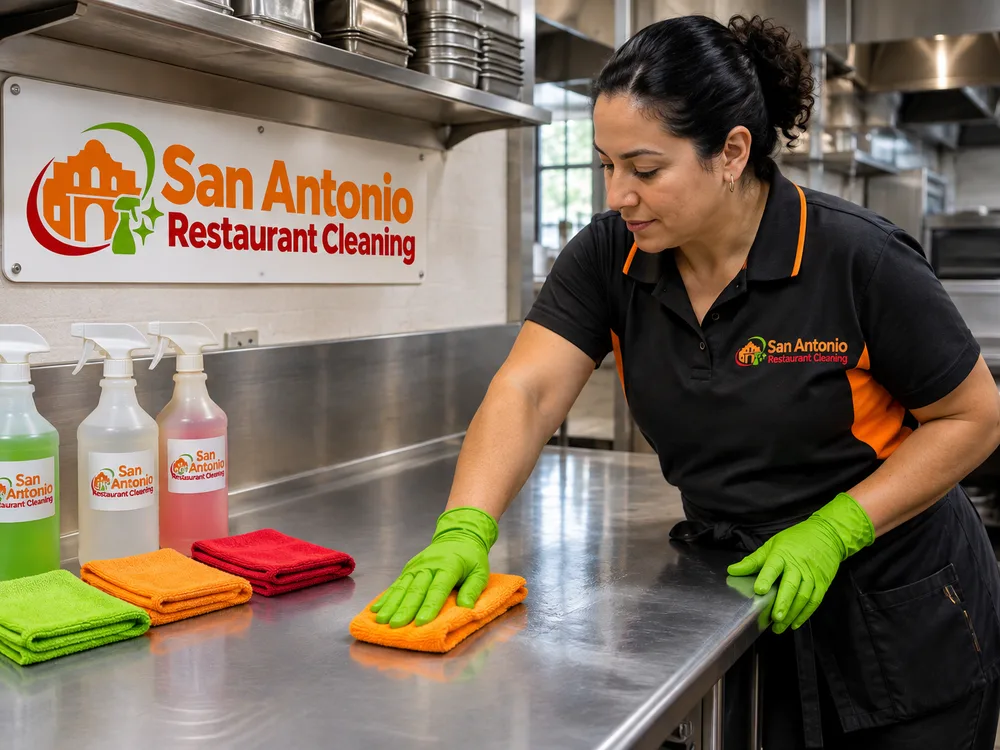
We inspect the accessible work areas with a manager, note current conditions, discuss operating hours, and identify sensitive surfaces or equipment restrictions.
Set the Scope and Frequency
The proposal lists included areas, task frequency, access arrangements, and any periodic detail work. Recurring service may be scheduled daily, several times per week, weekly, or at another interval that fits the restaurant.
Prepare for the First Visit
The manager confirms entry instructions and makes sure food, utensils, and personal items are stored as agreed. The crew brings the products and tools assigned to the approved work.
Clean in a Controlled Order
Crews generally work from cleaner areas toward dirtier areas and from higher surfaces toward floors. Kitchen, dining, and restroom tools remain separated, and chemicals are used according to their labels.
Review and Adjust
After service begins, managers can report priority changes or recurring trouble spots. The scope can be updated when menus, hours, equipment placement, or customer volume changes.
Commercial Kitchen Detail Without Disrupting Operations
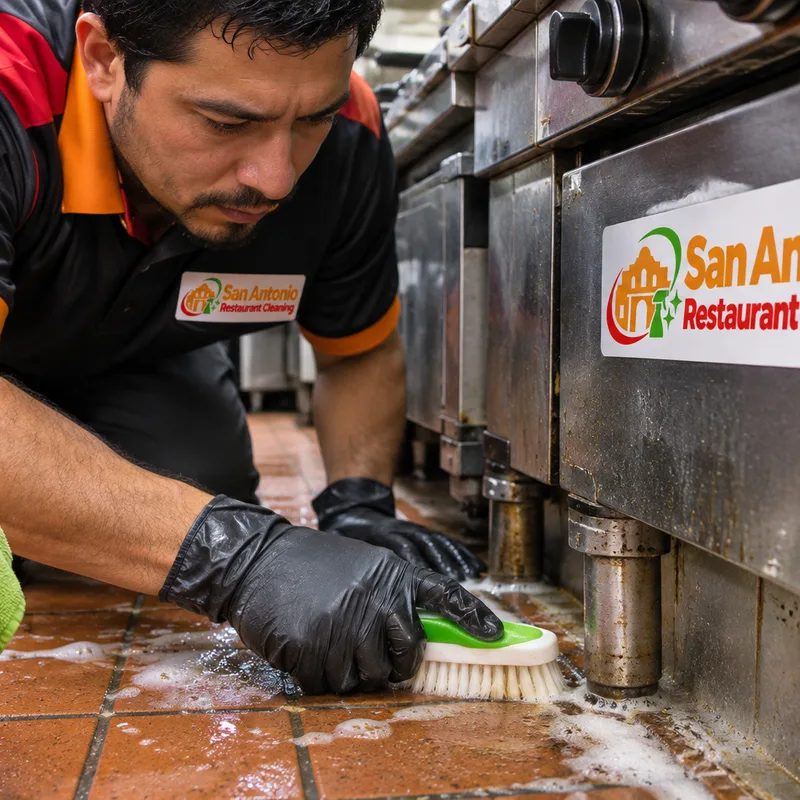
Restaurant kitchens develop residue in predictable places: behind equipment edges, around cooking-line floors, along baseboards, beneath movable racks, and near dishwashing areas. Heat can harden greasy film, while foot traffic spreads it across tile and grout. A planned rotation prevents detail work from being postponed until buildup becomes difficult to remove.
Surface compatibility matters. Stainless steel should be cleaned with the grain where practical, and abrasive tools should not be used automatically. Degreasers need the proper dilution and dwell time, but they also must be fully removed where the label requires rinsing. Floors need measured chemical use because excess product can leave a film that attracts soil or contributes to poor footing.
Hot weather in the San Antonio region can increase tracked dust and place more demand on entry areas, waste routes, and floors near exterior doors. Sudden rain can also bring mud and moisture through busy entrances. A Schertz cleaning plan can give those routes extra attention when conditions change rather than applying the same effort to every part of the building.
Standards That Protect the Restaurant's Routine
Professional cleaning should fit the restaurant's food-safety procedures and management controls. The Texas Department of State Health Services publishes food-establishment rules, while local regulatory and inspection responsibilities depend on the restaurant's jurisdiction. Managers remain responsible for knowing which authority applies to their location and for maintaining required records and practices.
Our cleaning scope focuses on assigned, accessible surfaces. Crews should never move gas-connected or permanently installed equipment unless that work has been specifically approved and can be performed safely. Cooking exhaust hoods, filters, fans, and ducts may require separate specialist cleaning under applicable fire-safety requirements. Pest treatment, grease-trap pumping, biohazard remediation, and equipment repair are also separate from routine restaurant cleaning.
Consistency comes from written task lists and clear communication. The manager should know whether a task occurs every visit, weekly, or as scheduled detail work. If a damaged surface, leak, pest evidence, or unsafe condition is found, it should be reported rather than concealed by cleaning. That gives the restaurant a useful maintenance signal and keeps the crew within the agreed scope.
Get a written cleaning scope that matches your operating hours, priority areas, access needs, and preferred service frequency.
Call for a Free QuoteQuestions About Restaurant Cleaning Services in Schertz
How much does restaurant cleaning in Schertz cost?
Restaurant cleaning is usually priced after a walkthrough because square footage alone does not show the workload. Kitchen grease levels, dining-room size, restroom count, flooring, service frequency, access time, and the amount of first-visit detail work all affect the proposal. A recurring maintenance visit generally costs less than an intensive initial cleaning of the same facility. The exact price is confirmed in a written scope after the restaurant is assessed.
Can cleaning be scheduled after the restaurant closes?
Yes, after-hours cleaning can be arranged when staffing and secure access are available. Schertz restaurants near Interstate 35, FM 78, and major retail areas often have different closing and delivery schedules, so entry time, alarm instructions, key control, and the expected completion window should be agreed upon before service starts.
How long does the first cleaning take?
The first visit often takes longer than a routine visit because existing grease and edge buildup must be brought to a maintainable condition. The duration depends on the facility's size, current condition, number of rooms, floor type, and whether equipment can be safely moved. A walkthrough provides the best basis for estimating crew time and determining whether work should be completed in one visit or phased.
Do you clean food-contact surfaces?
Food-contact surfaces can be included when the approved process, products, access, and restaurant responsibilities are defined in advance. Cleaning must remove soil before sanitizing, and the sanitizer must be used at its labeled concentration and contact time. Food, utensils, and ingredients should be stored or protected before the crew begins.
Are exhaust hoods and grease ducts included?
Internal hood, fan, and duct cleaning is not part of ordinary janitorial service and should be handled by a qualified kitchen-exhaust cleaning provider. Accessible exterior hood surfaces and approved removable items may be included in a general scope, but the proposal should state the boundary clearly. This distinction helps the restaurant coordinate cleaning with its fire-safety and equipment-maintenance requirements.
Can you work around daily employee cleaning duties?
Yes, the professional scope can complement employee opening and closing checklists. During the walkthrough, managers can identify tasks already assigned to staff and the areas that need deeper or more consistent attention. That may include floor edges, dining-room details, restrooms, entry glass, or a rotating kitchen schedule.
What should the restaurant do before a cleaning visit?
The restaurant should store food and utensils, clear approved work surfaces, identify equipment that must not be moved, and provide the agreed access. Managers should also communicate recent spills, damaged flooring, leaks, or other hazards. Good preparation gives the crew more time for cleaning and reduces the risk of disturbing restaurant property.
Plan Reliable Cleaning Around Your Next Shift
Tell San Antonio Restaurant Cleaning about your Schertz facility, operating schedule, and problem areas. We will help define a practical scope and service frequency before work begins.