
Overnight Restaurant Cleaning
Start each service day with a clean kitchen, guest-ready dining room, stocked restrooms, and floors that have been cleaned after closing.
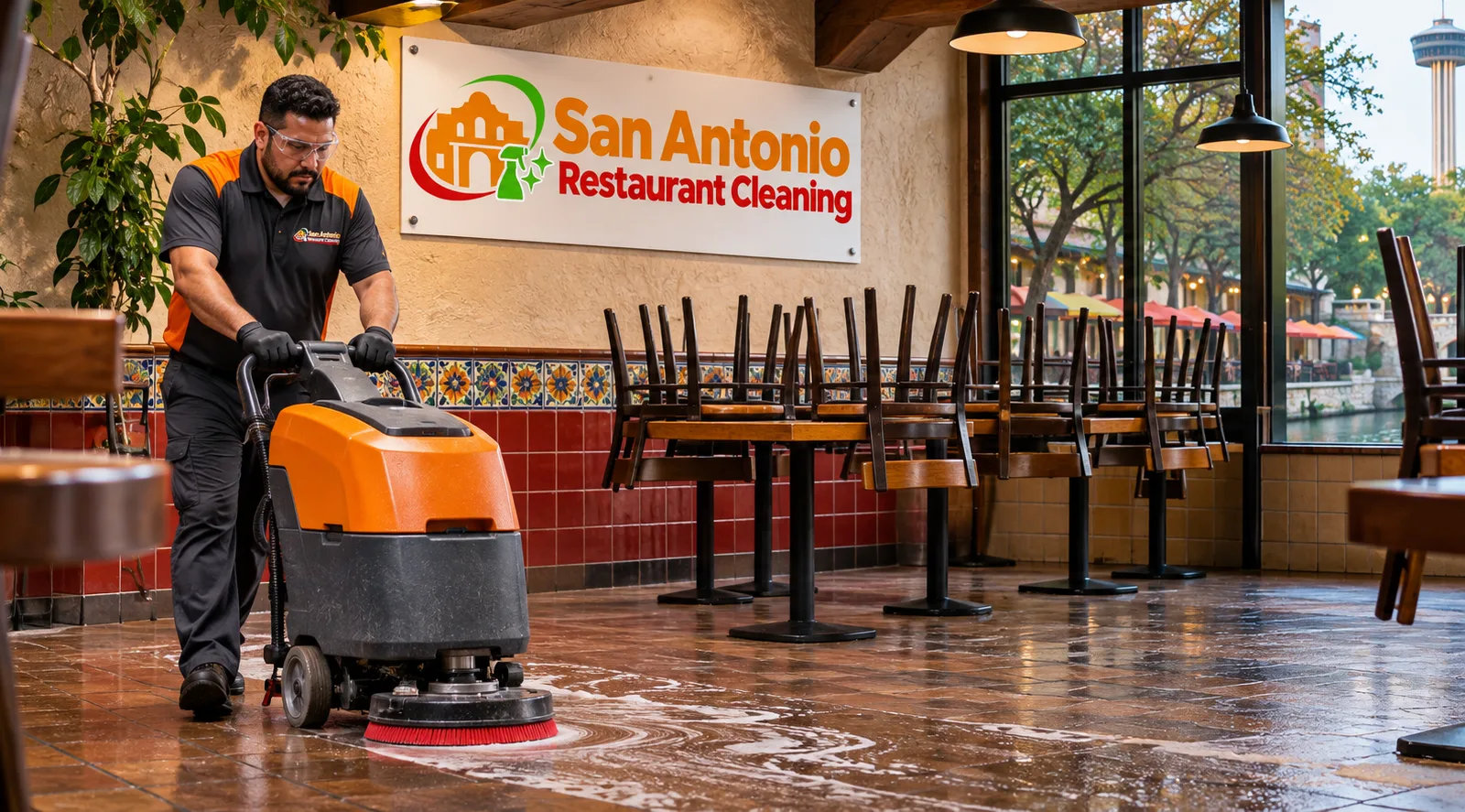
Nightly cleaning built around restaurant operations
Overnight Restaurant Cleaning handles the work that is difficult to complete while guests, servers, and kitchen staff are moving through the building. Once service ends, the crew follows an agreed scope for the dining room, kitchen, restrooms, entry, and other assigned areas. The goal is a consistent opening condition rather than a rushed cleanup at the end of a long shift.
San Antonio restaurants face operating conditions that can quickly show on floors and glass. Downtown properties near the River Walk may have late guest traffic and compact service access. The Pearl mixes dining activity with busy public spaces and events. Restaurants along the St. Mary's Strip often need work scheduled after late closing times, while Stone Oak dining rooms may have larger guest areas and parking-lot entrances that track in grit. Hot weather also increases the need for prompt attention to food residue, waste areas, and odor sources.
San Antonio Restaurant Cleaning is an experienced restaurant team in San Antonio, TX that plans the work around closing procedures, alarm instructions, access restrictions, and the time the opening crew needs the building back. A written checklist gives managers a practical way to define responsibilities and review recurring results.
What Restaurant Night Cleaning can cover
Dining rooms and guest areas
Tables, chairs, booths, ledges, glass, host stations, and other assigned touchpoints are wiped according to the approved scope. Floors are vacuumed, swept, damp mopped, or machine scrubbed based on the surface and soil level.
Kitchen cleaning
Crews can clean accessible exterior surfaces, prep-area floors, wall splashes, sinks, and designated equipment exteriors after food and utensils have been put away. Cleaning beneath movable equipment and around floor edges can be scheduled when access permits.
Restaurant Restroom Cleaning
Toilets, urinals, sinks, counters, mirrors, partitions, dispensers, floors, and touchpoints receive routine attention. Consumables can be restocked from supplies kept on the premises, and visible maintenance concerns can be reported.
Entryways and floors
Entry glass, mats, thresholds, corners, and traffic lanes are common priorities. The cleaning method should match the material, whether the restaurant has quarry tile, sealed concrete, luxury vinyl tile, ceramic tile, or carpet.
Waste handling
Interior receptacles can be emptied, relined, and moved to the restaurant's assigned disposal point. The scope should state who handles cardboard, cooking oil, exterior grease areas, and dumpster access.
Scheduled detail work
Baseboards, chair legs, vents, wall marks, floor edges, and other buildup points can rotate through a periodic checklist instead of being overlooked during the nightly routine.
Restaurant restroom cleaning that holds up through the next shift
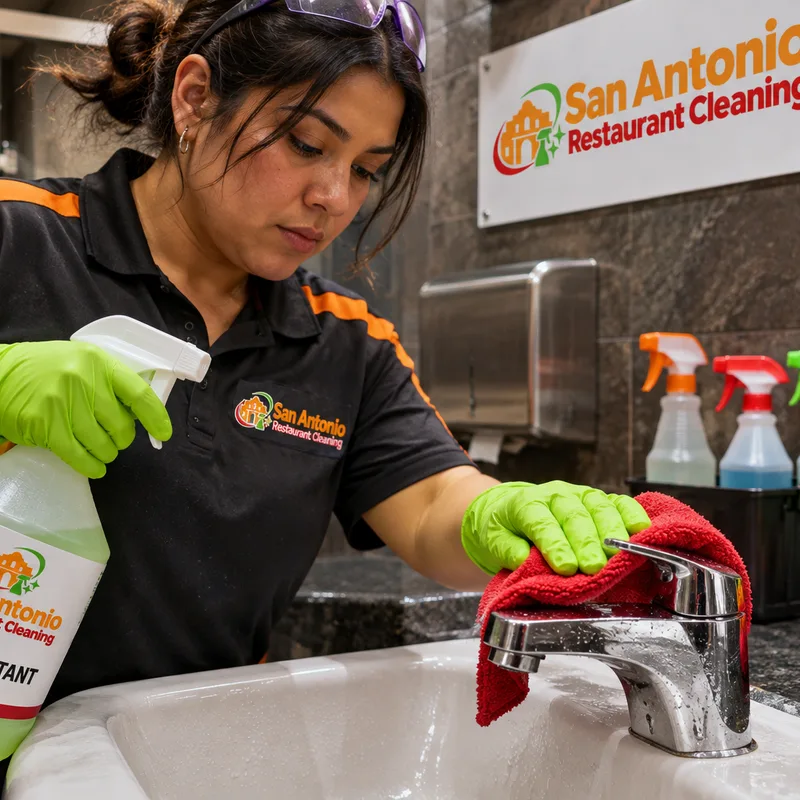
Restrooms affect a guest's impression of the entire restaurant. A nightly restroom routine should remove soil rather than move it between surfaces. Clean cloths and tools are separated by task, and high-touch points such as door handles, flush controls, dispensers, and faucet handles receive direct attention.
The crew begins by removing waste and checking dispensers, then cleans fixtures and mirrors before working down to the floor. EPA-registered disinfectants must be used according to their labels, including the stated contact time. Applying a product and immediately wiping it away may not meet its disinfection directions. Chemicals also should never be mixed.
Floor edges, grout lines, and the areas behind toilets need periodic detail cleaning because a quick center-floor mop will not address trapped residue. Managers can also specify restroom checks such as soap levels, paper supplies, drain odor, leaks, or damaged hardware. Cleaning staff can report a maintenance concern, although repair and plumbing work remain separate responsibilities.
Walk through the restaurant
The initial walkthrough identifies cleanable square footage, floor materials, restroom fixtures, kitchen access, closing times, waste procedures, security requirements, and areas retained by restaurant staff.
Build the cleaning scope
Daily tasks and rotating detail tasks are written by area. The plan also defines exclusions, approved chemicals, supply responsibilities, key or alarm procedures, and the required completion time.
Prepare for the first service
Managers confirm that food is stored, hot equipment is safe to approach, personal items are removed, and designated surfaces are accessible. The cleaning crew reviews site instructions before beginning.
Clean in a controlled sequence
A typical shift moves through assigned high surfaces and fixtures before floors, with separate tools for restrooms, dining spaces, and food-service areas. Warning signs remain in place while floors are wet.
Inspect and adjust
Completed work is checked against the scope. Feedback is tied to a room or checklist item so the recurring plan can be corrected, clarified, or expanded as operating needs change.
Daily Restaurant Cleaning for kitchens and floors
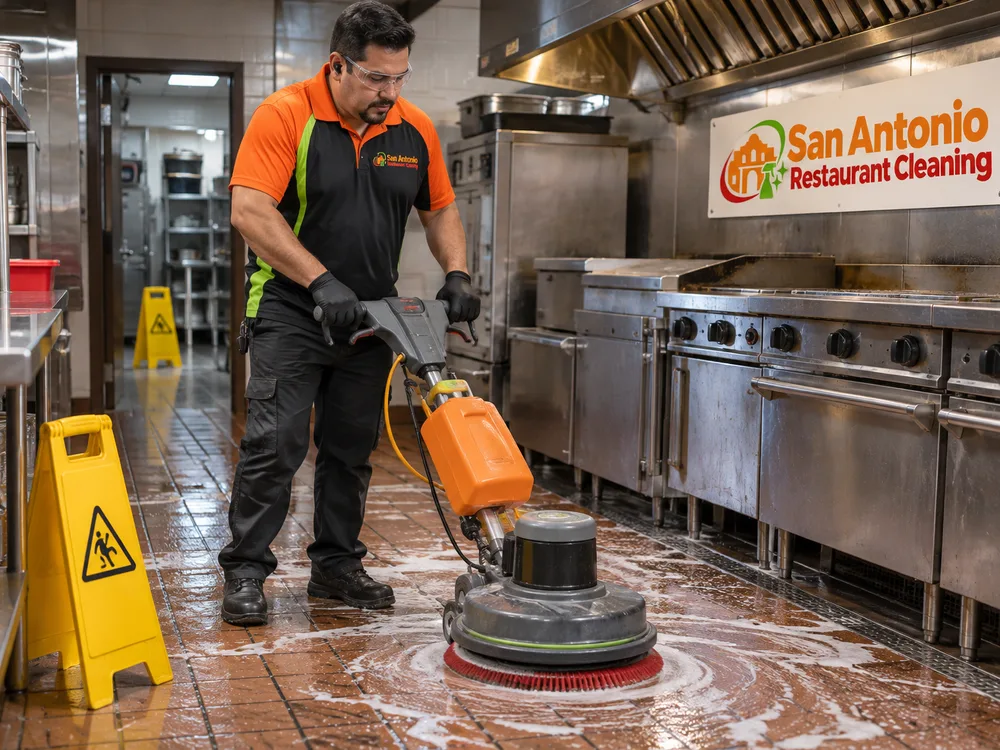
Kitchen floors collect grease, food particles, and moisture in corners, grout lines, and beneath accessible equipment. A sound process starts with dry soil removal. Applying water too early can spread residue and turn loose debris into slurry. The crew then uses a compatible degreaser at the label dilution, allows the required dwell time, agitates the surface, and removes the solution before rinsing when the product calls for it.
Quarry tile and grout often need focused agitation around cook lines and sinks. Sealed concrete and resilient flooring require products that will not damage the finish. Dining-room carpet needs vacuuming and spot treatment, while periodic extraction is a separate task that should be scheduled with enough drying time. Automatic scrubbers can improve consistency in open floor areas, but edges and tight spaces still require manual work.
Restaurant janitorial cleaning is different from hood, duct, and exhaust-system service. It also does not replace pest control, equipment repair, or specialized grease-trap work. Defining those boundaries before service starts prevents important tasks from being assumed rather than assigned.
Choosing a Restaurant Janitorial Company
A dependable restaurant janitorial company should ask detailed questions before giving a final scope. Square footage matters, but the number of restrooms, floor type, seating layout, kitchen soil, closing schedule, access, and required frequency can matter just as much. Ask how quality checks are documented, how missed items are reported, and whether the same checklist is used by regular and substitute crew members.
Restaurant Janitorial Services in San Antonio also need a realistic access plan. A downtown restaurant may have limited loading access or a narrow window between closing and morning deliveries. A late-night venue near the St. Mary's Strip may require a later crew arrival than a dining room that closes after dinner. Locations around the Pearl may need schedules coordinated with shared public activity or building rules. These details belong in the operating plan, not in informal assumptions.
Managers should also review Safety Data Sheets for site chemicals, label directions, storage arrangements, and procedures for wet floors or broken glass. Ask what is excluded. Cooking appliances may need to be cool, empty, and released by restaurant staff before exterior cleaning. Food-contact surfaces may require a wash, rinse, and sanitize process using products approved for that use. Clear division of work protects both the opening team and the cleaning crew.
Get a written nightly scope based on your closing time, floor materials, kitchen conditions, restroom count, and opening deadline.
Call for a Free QuoteQuestions about Nightly Restaurant Cleaning in San Antonio
How is Overnight Restaurant Cleaning priced?
Pricing is usually based on cleanable square footage, frequency, soil level, restroom count, floor materials, kitchen scope, and the time available after closing. A compact counter-service restaurant has a different labor profile than a large dining room with multiple restrooms and a grease-prone cook line. A walkthrough at the San Antonio property is the best way to produce a written scope and reliable recurring price.
Can Restaurant Night Cleaning begin after a late closing time?
Yes, service can be planned around a late closing time when the building offers a workable cleaning window. The plan should account for the final guests, kitchen shutdown, employee departure, alarm procedures, and the opening crew's arrival. Late-night operations near the St. Mary's Strip may require a different start time and access routine than restaurants that close after dinner.
Do we need Daily Restaurant Cleaning or fewer visits?
The right frequency depends on operating days, guest volume, menu, floor conditions, and the sanitation tasks retained by restaurant employees. Busy restrooms and grease-exposed floors may need attention after every operating day, while some detail tasks can rotate weekly or monthly. The written scope should separate nightly duties from periodic work.
What must restaurant staff do before the overnight crew arrives?
Restaurant staff typically secure food, remove dishes and utensils, complete assigned equipment shutdown, and make scheduled areas accessible. Hot surfaces should be allowed to cool before cleaning personnel approach them. The exact handoff should be documented during the walkthrough so managers and cleaners know who handles each task.
Are cleaning products safe for food-service areas?
Products must be selected for the surface and used according to their labels, especially around food-contact areas. A sanitizer or disinfectant may require a specific dilution and contact time, and some products require a potable-water rinse. Safety Data Sheets and product labels should remain available at the San Antonio restaurant or through the cleaning provider's documented chemical program.
Does nightly janitorial service include hood and exhaust cleaning?
Routine janitorial service generally does not include internal hood, duct, fan, or exhaust-system cleaning. Those systems require specialized procedures and should be covered by a separate qualified provider. The nightly scope can identify accessible equipment exteriors, nearby walls, and floors that the janitorial crew is assigned to clean.
Can Restaurant Restroom Cleaning include supply restocking?
Yes, restroom supplies can be restocked when the restaurant keeps compatible soap, paper, and liners in an agreed storage location. The checklist should identify the dispensers to check and the minimum stock expected at completion. A recurring shortage can then be reported before it affects the next service period.
How quickly can recurring service start?
The start date depends on walkthrough availability, scope approval, access arrangements, supply preparation, and crew scheduling. Restaurants with straightforward access may be easier to schedule than downtown locations with restricted entry or short overnight windows. The first visit should begin only after responsibilities, exclusions, and completion expectations are documented.
Plan a cleaner opening shift
Tell San Antonio Restaurant Cleaning about your operating days, closing routine, floor types, kitchen, and restrooms. We will discuss a practical overnight schedule and define the work in writing.